Skin needling has been around for a long time, and in more recent years, has become increasingly popular within our industry.
Below you will find my complete guide to the Skin Needling treatment we offer in Perth: what it is, what you can expect from treatment, how it works and more!
What is Skin Needling?
Skin needling works by creating controlled micro-injuries that activate the body’s natural wound-healing response. This process can stimulate collagen production and remodelling, which may gradually improve the appearance of uneven texture, fine lines and certain types of acne scarring. Changes develop over time, and the extent of improvement varies between individuals.
Treatment can be tailored by adjusting the needle depth, speed and technique according to the concern being addressed. Your practitioner also considers skin thickness, the treatment area and your skin’s response. Different settings may be used across the face or body, allowing more than one concern to be addressed within a session where appropriate.
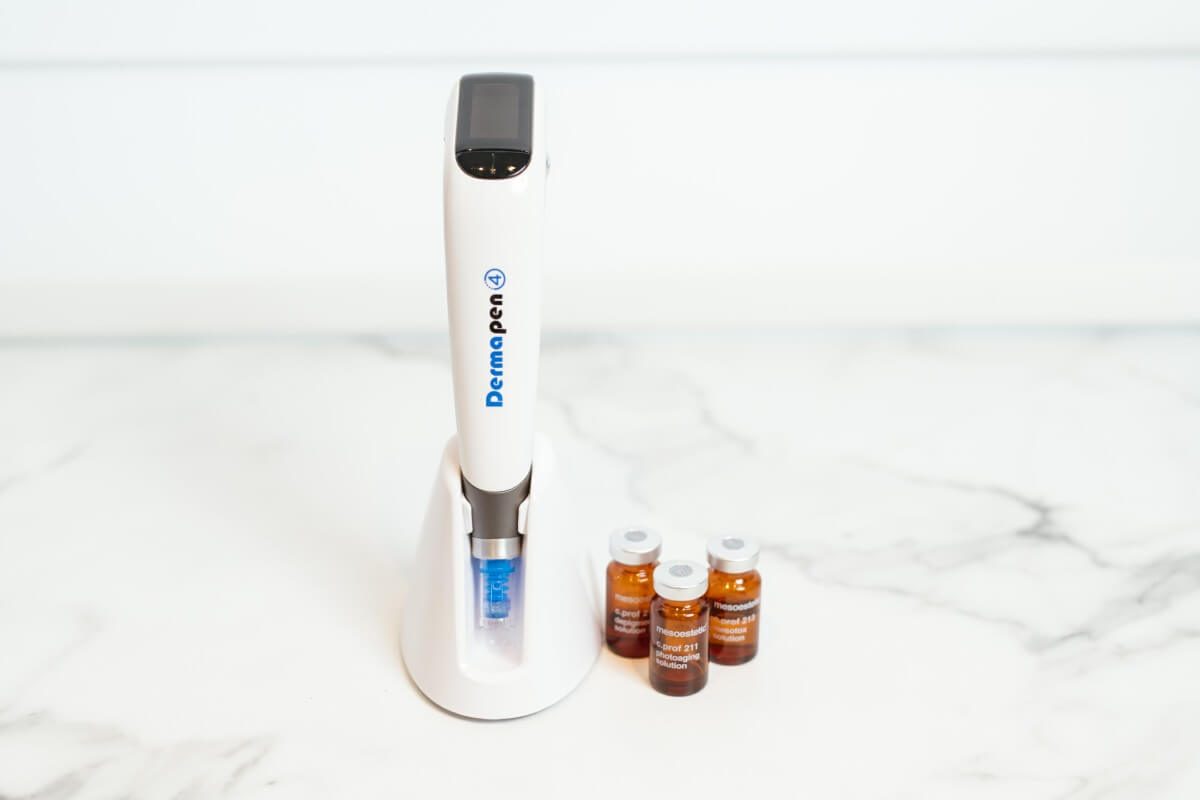
The Dermapen 4 used in our clinic has adjustable needle depths ranging from 0.2 mm to 3.0 mm, with the maximum depth reserved for its dedicated scar treatment setting. Not every depth is suitable for every area or concern, and the settings are selected following an individual assessment.
Shallower settings create more superficial micro-injuries and may be selected for certain treatment areas or concerns. However, pigmentation cannot be treated simply by matching a needle depth to the visible discolouration. Melasma and post-inflammatory hyperpigmentation require careful assessment, as inflammation from treatment can sometimes worsen pigmentation. Persistent red marks following breakouts also differ from pigmentation and pitted scarring, and may require a different approach.
Where appropriate, deeper settings may be considered for selected acne scars to encourage remodelling within the dermis—the layer of skin containing collagen and elastin fibres. Treatment planning for wrinkles, uneven texture and visible pores also depends on the underlying concern rather than needle depth alone. Skin needling does not remove pores or guarantee the correction of scars or wrinkles.
What Can Skin Needling Treat?
Skin Needling can be adapted to address a range of skin concerns, with treatment settings selected according to your skin, the area being treated and your individual goals. It may be suitable for a variety of skin types, although it is not appropriate for every person or condition.
One reason people consider skin needling is to improve the appearance of certain types of acne scarring. By creating controlled micro-injuries, treatment stimulates the skin’s wound-healing response and collagen remodelling, which may gradually soften the appearance of some scars and improve uneven texture.
Needle depth can be adjusted throughout treatment, but selecting an appropriate setting involves more than determining how deeply to treat. Your practitioner considers the type of scarring, skin thickness, treatment area and your skin’s response. Deeper treatment does not automatically deliver a better outcome.
Uneven pigmentation requires a different assessment. Skin needling does not simply break down pigment, and concerns such as melasma and post-inflammatory hyperpigmentation may require other treatments or a combined approach. As treatment-related inflammation can worsen pigmentation in some people, suitability needs to be assessed carefully.
Visible pores are another concern patients often ask about. Pores are a normal and necessary part of the skin, and their size and visibility are influenced by factors including genetics, oil production and skin structure. Skin needling may improve surrounding skin texture and make pores appear less noticeable in some people, but it cannot remove pores or create poreless skin.
Skin needling is not a treatment for physically clearing blocked pores or extracting blackheads. It does not push congestion out of the skin, and breakouts following treatment should not automatically be considered an expected or beneficial “purge”. Active acne or inflamed breakouts may require management before needling is considered.
For people concerned about fine lines or changes in skin firmness, collagen remodelling may contribute to gradual improvements in skin texture and the appearance of some lines. However, skin needling does not stop the ageing process, and the degree of improvement varies.
These potential changes develop over time rather than immediately after treatment. Initially, the skin may look red and feel sensitive, tight or dry. A series of treatments may be recommended, with the plan guided by your response, recovery and goals.
In consultation, we consider where skin needling may fit within your broader treatment plan, alongside skincare and other suitable options. The aim is to make an informed choice based on your individual concerns, realistic expectations and the potential benefits and risks.
Does The Device Matter?
When you look into skin needling, you may see that there are a few different pens on the market. All claiming to be the very best, however not all skin needling devices are created equal.
The skin needling pen 100% matters. We want to be working with something we believe in and can trust will do the job, in the safest and effective way possible.
At Youth Lab, we use the Dermapen 4. Dermapen have been around for years and have been pioneers in the skin needling market. They continue to update their devices to be able to support in-clinic results.
What Does The Procedure Involve?
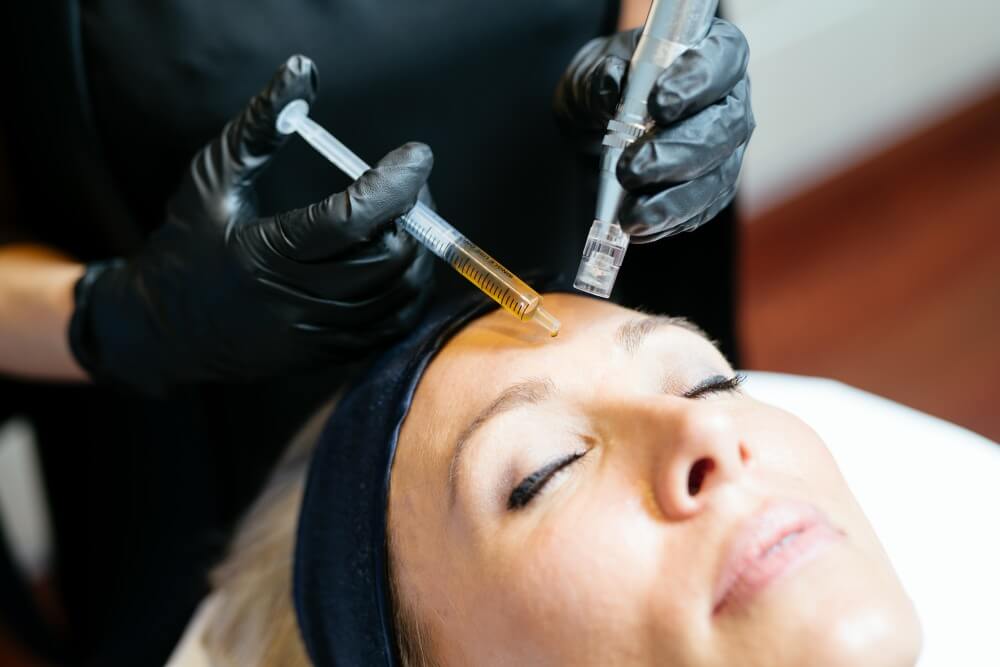
Skin Needling can be adjusted to suit different skin concerns and treatment areas. It is understandable to feel apprehensive about the procedure. Rest assured, your practitioner will explain how best to prepare, what to expect and assess whether treatment is suitable for your skin. Sensations vary between individuals, and topical numbing cream can be applied to manage discomfort.
First, the skin is thoroughly cleansed and prepared. Any measures to manage discomfort are discussed beforehand and selected according to your individual needs. Once the skin is prepared, the needling pen is moved systematically across the treatment area, using a hyaluronic acid-based glide product suitable for the procedure.
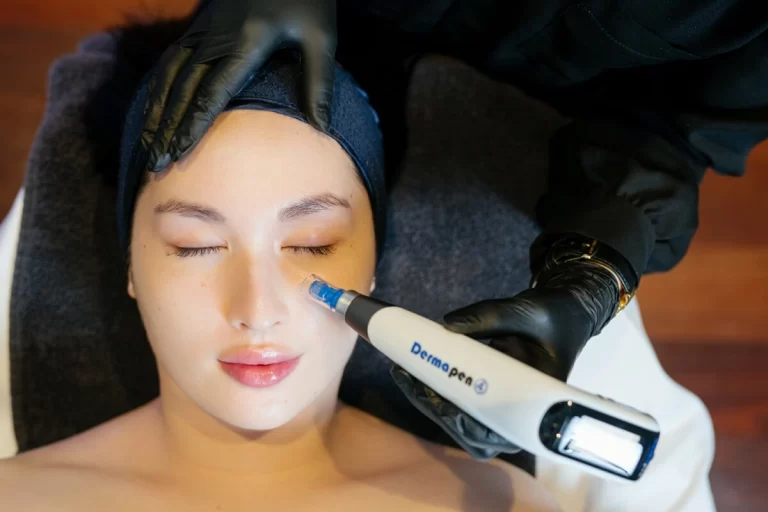
The Dermapen 4 used in our clinic has a cartridge containing 16 microneedles. These needles oscillate rapidly, moving up and down to create controlled microchannels in the skin. This controlled injury initiates the skin’s repair response. The device allows your practitioner to adjust the needle depth and speed while working across the treatment area.
Needle depth is selected according to the concern being addressed, the area being treated, skin thickness and your individual response. Different settings may be used within the same session. Dermapen 4 includes a dedicated scar setting with a maximum depth of 3 mm; however, this is not necessary or appropriate for every scar or treatment area. Deeper settings and treatment over more sensitive areas may cause greater discomfort.
Throughout treatment, your practitioner monitors how your skin responds and works towards an appropriate clinical endpoint – the skin response used to guide the extent of treatment. This may include redness and, with some treatment settings, pinpoint bleeding. The intended endpoint varies according to the treatment plan, whether addressing the appearance of fine lines, acne scarring, selected pigmentation concerns or uneven skin texture. More redness or bleeding does not necessarily indicate a more effective treatment.
A common misconception is that deeper needling automatically produces better results. Depth is one part of treatment planning, alongside technique, the concern being addressed, your skin’s healing response and aftercare. The aim is to select appropriate settings for your skin, rather than use the deepest setting available. Results vary, and a series of treatments may be recommended following assessment.
What Can I Expect Post Skin Needling?
After skin needling, your skin may feel warm, tight, tingly and sensitive to touch, similar to sunburn. Redness is common and may last around 48 hours, although it can persist longer depending on the treatment intensity and your individual skin response.
Between days two and five, your skin may feel dry or slightly rough, sometimes described as a sandpaper-like texture. Mild flaking can also occur as the skin recovers and may continue for up to seven days. Not everyone experiences these changes, and recovery times vary.
Some people feel comfortable returning to work the following day, while others may need longer depending on their skin’s response and the nature of their work. Your practitioner will explain any temporary restrictions on exercise, heat exposure, swimming and makeup, along with what to expect during recovery.
For the first week, keep your skincare routine simple to support healing and minimise irritation. Your practitioner will recommend appropriate recovery products and explain when and how to use them, including during the first five days.
Pause potentially irritating active products, including vitamin A, exfoliating acids such as AHAs and BHAs, and certain vitamin C formulations, until your practitioner advises that your skin is ready. The timing will depend on the product and how your skin is recovering. If you use prescribed skincare, discuss any changes with your treating practitioner.
Avoid scrubs, exfoliating products and masks unless specifically recommended as part of your aftercare. Skin needling creates controlled micro-injuries rather than removing the entire surface layer of skin, so the priority is to protect the healing skin barrier. Do not pick at or manually remove flaking skin.
Follow your practitioner’s instructions for gentle cleansing, moisturising and the timing of sunscreen application. Protect your skin from direct sun exposure with shade and a hat, and use broad-spectrum SPF 50+ sunscreen once advised.
If redness, warmth, swelling or pain increases rather than settles, or you notice discharge, blistering or other unexpected changes, contact the clinic promptly for advice.
Skin Needling vs. Mesotherapy
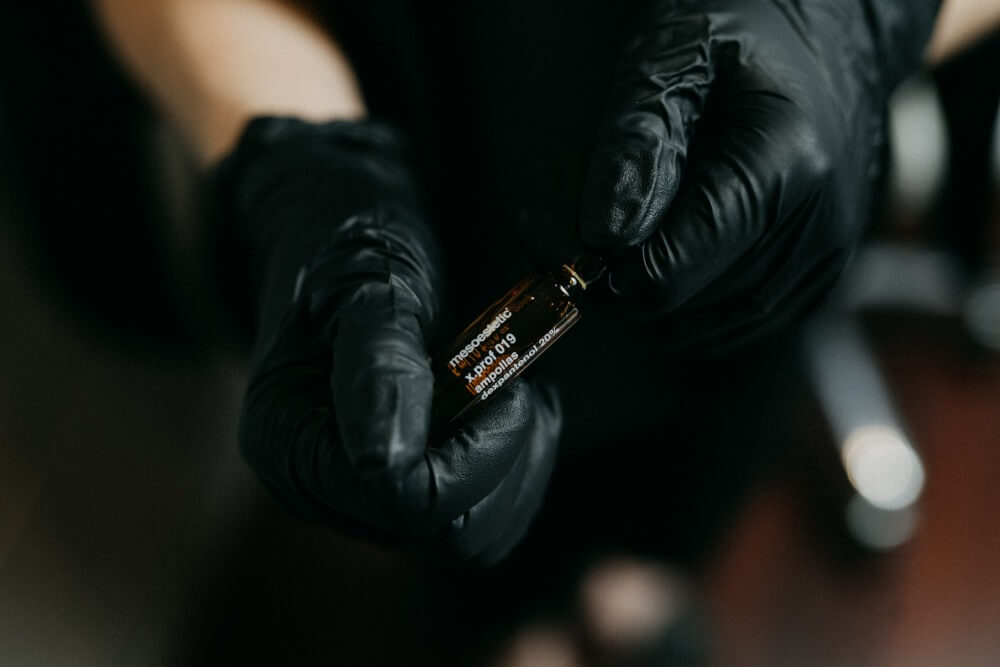
At Youth Lab, we offer both skin needling and mesotherapy as treatment options. Mesotherapy is a treatment aimed at delivering active solutions, vitamins and compounds into certain layers of the skin to create a therapeutic outcome. Mesotherapy can be performed in a number of ways but we love to infuse these solutions using our skin needling devices.
The depth used to infuse these solutions is much less than in traditional skin needling, with the solutions only going into the superficial layers of the skin (usually between the epidermis and dermis).
On the other hand, Skin Needling can be chosen to support skin resurfacing, scarring, collagen stimulation and other skin concerns.
Downtime also differs from Skin Needling and Mesotherapy. As we are not aiming for a wound response in the skin with Mesotherapy, we tend to have minimal downtime such as slight erythema and inflammation in the skin, which can last up to 24 hours. Skin can present a little tight and dry the following day, however once these subside – the skin is hydrated, plump and very smooth in texture.
Mesotherapy is a great introduction to skin needling for those who haven’t tried skin needling before or for those who are after a mild resurfacing and rejuvenating treatment.