Facial ageing is one of the most studied areas in aesthetic medicine, and one of the most misunderstood outside of it. The changes we observe in the mirror as the years pass are rarely the result of a single process. They are the cumulative expression of multiple simultaneous changes: in the skin itself, in the fat beneath it, in the muscles of expression, in the ligaments that hold structures in place, and in the bones that form the foundation of it all.
Understanding how the face ages, as a three-dimensional, layered structure rather than simply a surface, is what separates an informed approach to skin health from a reactive one. And it is precisely this understanding that sits at the heart of a well-conducted aesthetic consultation.
The Layers of the Face and How They Change
The face is not a flat canvas. It is a complex, three-dimensional structure composed of distinct anatomical layers, each of which ages at its own pace and in its own way. When we understand these layers, the changes we see on the surface begin to make much more sense.
The Skin. The outermost layer (the epidermis and dermis) undergoes the changes most directly visible to us. Collagen and elastin decline progressively from the mid-twenties, resulting in skin that is thinner, less firm, and less able to recoil. The skin surface becomes uneven in texture and tone. Fine lines form initially from repetitive muscle movement; over time, they deepen into static lines that are present regardless of expression. Dermal volume diminishes, contributing to a crepey quality in areas like the under-eye and neck.
The Subcutaneous Fat. Beneath the skin lies a layer of fat compartments, discrete pockets of volume distributed across the face. In youthful anatomy, these compartments are full and well-positioned, sitting high on the cheeks and contributing to the characteristic convexity of a young face. With age, these fat compartments deflate and descend. The result is a flattening of the midface, a deepening of the nasolabial folds, and the gradual emergence of hollowing in the temples and under-eye region.
The Muscles of Expression. The face contains more than 40 muscles responsible for the extraordinary range of human expression. With decades of repeated movement — smiling, squinting, frowning — the lines created by these muscles gradually become etched into the overlying skin. In some areas, increased muscle activity over time can contribute to the pulling down of facial features, amplifying the appearance of descent.
The Ligaments and Retaining Structures. Ligaments act as the suspension system of the face, anchoring the skin and soft tissue to the underlying bone. With age, these ligaments elongate and weaken, allowing the tissue they once held firmly in position to descend. This ligamentous laxity is a key driver of the jowling and lower face heaviness that often becomes apparent from the forties onward.
The Bone. Perhaps the least discussed but most significant contributor to facial ageing is the skeleton itself. The facial bones remodel throughout life — the jaw narrows, the orbital rim (the bony frame around the eye) expands, the pyriform aperture (the bony opening of the nose) widens, and the overall projection of the midface reduces. These skeletal changes alter the foundation upon which all the soft tissue above sits, directly influencing how the overlying skin and fat appear.
The Pattern of Facial Descent
When we consider all of these changes together, a coherent pattern of facial ageing emerges. The face does not simply wrinkle, it deflates, descends, and loses the three-dimensional structure that characterises youth.
The temples hollow. The brow descends slightly. The upper eyelid loses fullness. The under-eye region deepens and the boundary between the lower lid and the cheek (once seamless) becomes a visible transition. The cheeks flatten and shift downward. The nasolabial folds deepen. The corners of the mouth turn downward, creating a resting expression that may not reflect how a person feels. The jawline softens as jowling develops, and the neck changes in both skin quality and contour.
These changes do not happen in isolation, and they do not happen at the same rate in every person. Genetics, sun history, hormonal profile, lifestyle, and body composition all influence the pace and pattern of individual facial ageing. This is one of the central reasons why a thoughtful, personalised consultation is so important.

What a Thorough Aesthetic Consultation Covers
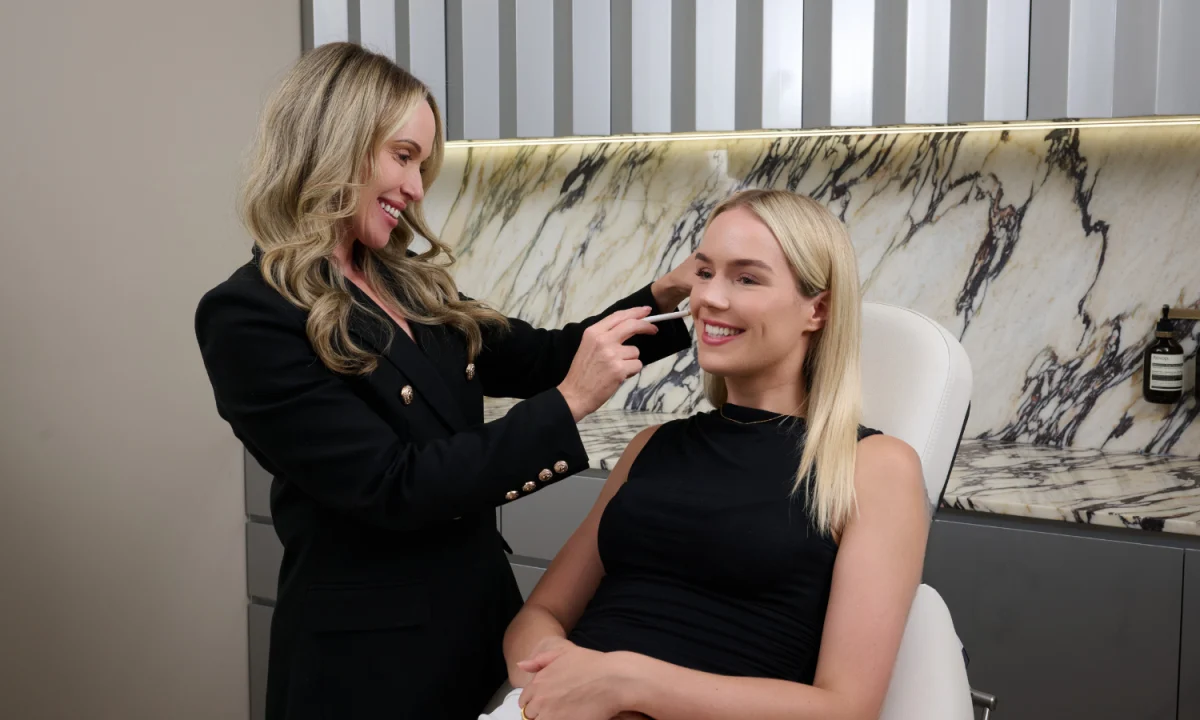
A well-conducted consultation is far more than a discussion about concerns. It is an assessment. A structured, systematic evaluation of the face as a whole, informed by an understanding of anatomy, ageing, and the individual in front of the practitioner.
Medical and Skin History. A thorough consultation begins with history-taking. This includes current medications (including supplements that affect bleeding), skin conditions, previous treatments and their outcomes, allergies, autoimmune conditions, and any history of cold sores or persistent skin infections. For female clients, hormonal health (including contraception and menopausal status) is relevant, as this directly influences skin quality and wound healing. Lifestyle factors including sun exposure history, smoking, and diet are also discussed.
Skin Assessment. The skin itself is assessed for hydration, texture, tone, pigmentation, barrier integrity, and visible signs of photo-damage. Understanding the current state of the skin informs every subsequent recommendation, whether that relates to at-home skincare, in-clinic treatments, or both.
Facial Anatomy and Volume Assessment. The practitioner evaluates the face in three dimensions — assessing volume distribution, the degree and location of any descent, the depth and character of lines and folds, skin laxity, and the underlying bony structure. This assessment is conducted at rest and with animation, to understand how the face moves and where dynamic versus static concerns are most prominent.
Understanding Goals and Expectations. Equally important to the clinical assessment is an honest conversation about what the client is hoping to achieve, and what is realistic. Aesthetic medicine is most effective, and most satisfying, when expectations are calibrated to what is genuinely possible and appropriate for an individual’s anatomy and stage of life. A practitioner’s role includes helping clients understand what they are observing in their own face and how different approaches address different underlying drivers.
A Treatment Philosophy, Not Just a Treatment Plan. The best consultations result not in a list of procedures, but in a shared understanding of an approach. This might include a conversation about the sequence and timing of treatments, the relationship between homecare and in-clinic work, the concept of skin health as an ongoing investment, and how goals may evolve over time. It reflects a long-term relationship between practitioner and client — built on trust, transparency, and a genuine commitment to the individual’s wellbeing.
Why This Matters
Facial ageing is nuanced, individual, and deeply multifactorial. Addressing it effectively requires more than selecting a treatment from a menu. It requires genuine clinical understanding, a thorough assessment, and a plan that is thoughtfully matched to the person, not just the concern.
This is the standard we hold ourselves to at every consultation. If you have been curious about what a skin health assessment involves, or what it might mean for your own skin at this stage of life, we would encourage you to start the conversation. There is no obligation, only the opportunity to understand your skin a little better.