
In accordance with Therapeutic Goods Administration (TGA) regulations, we are unable to provide detailed information about specific treatments online. Such information may be misinterpreted as the promotion of prescription-only (Schedule 4) medications – this is not permitted under TGA guidelines.
For this reason, a consultation with one of our practitioners is required. During your comprehensive consultation, your practitioner will carefully assess your skin, discuss your concerns, and provide education around suitable treatment options. A personalised treatment plan will then be created to address your individual needs.
Treatment costs will vary depending on your tailored plan and will be discussed with you in detail during your consultation.
At Youth Lab, we provide consultations for the treatment of volume loss and skin quality changes in the under-eye area, often referred to as the tear trough.
The under-eye region is a delicate area that may change over time due to factors such as skin thinning, structural changes, and shifts in underlying tissue. These changes can contribute to shadowing, hollowing, or altered skin texture beneath the eyes.
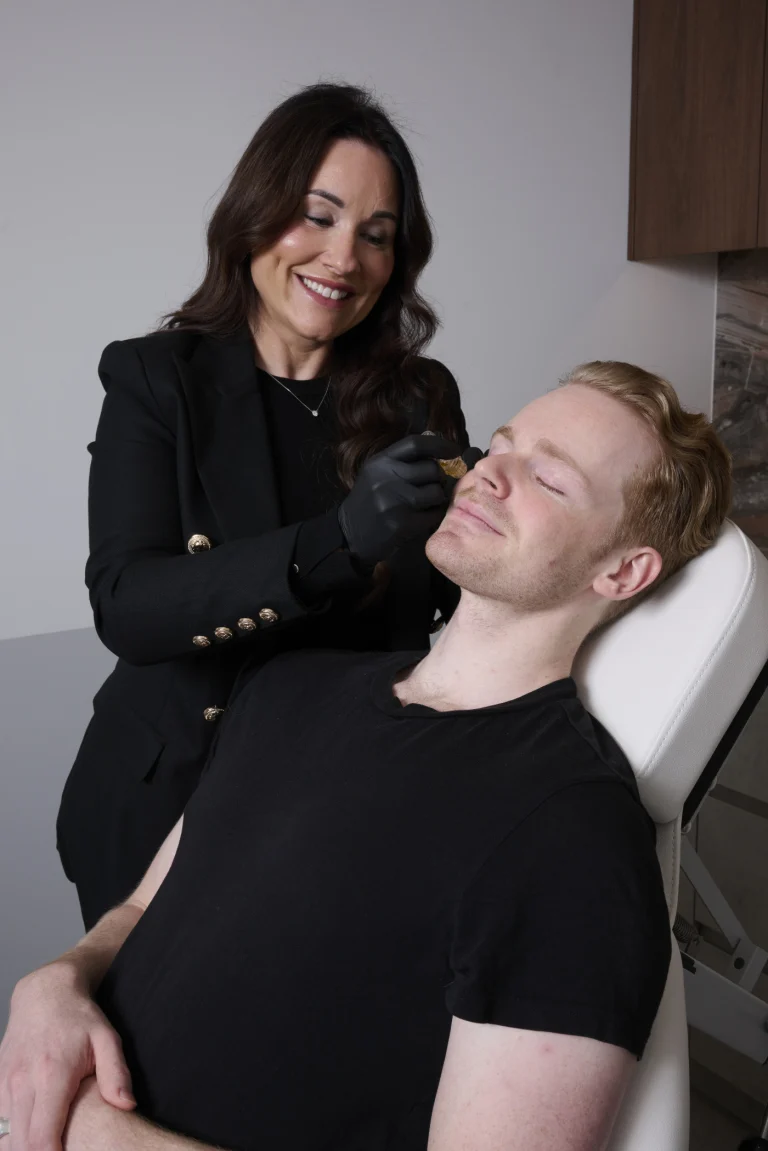
During consultation, your practitioner will assess your individual anatomy, listen to your concerns, and determine whether under-eye rejuvenation options may be appropriate. All approaches are conservative and prioritise safety, particularly in this anatomically sensitive area.
Understanding the Under-Eye Area
The skin beneath the eyes is thinner than elsewhere on the face and is therefore more susceptible to visible changes over time. Several factors may influence the appearance of this area:
Structural Changes
With age, subtle changes can occur in the bone structure around the eye socket and in the distribution of facial fat. These changes may contribute to the appearance of hollows or shadows beneath the eyes.
Skin Quality
Natural reductions in collagen, elastin, and hydration can result in thinner or more fragile skin, which may accentuate textural changes.
Vascular and Pigment Factors
The visibility of underlying blood vessels or variations in skin tone may contribute to darker-appearing areas beneath the eyes.
Lifestyle and Genetics
Sleep patterns, allergies, hydration levels, and genetic factors can also influence the appearance of the under-eye region.

Why People Consider Under-Eye Rejuvenation
Concerns commonly discussed during consultation may include:
-
Perceived hollowing or shadowing beneath the eyes
-
Changes in under-eye skin texture
-
Fine lines or crepiness
-
Puffiness or asymmetry
-
Dark-appearing circles not solely related to skin tone
Treatment suitability and approach are determined individually, based on anatomy, skin condition, and overall facial balance.

Treatment Options for Under-Eye Rejuvenation
Youth Lab offers a range of medical and skin-focused treatment options that may be considered for the under-eye area. Your practitioner will advise which options, if any, may be appropriate following assessment.
Examples of options that may be discussed include,
1. Prescription-Only Medical Treatments
Certain prescription-only treatments may be considered to support volume or structure in the under-eye region.
These treatments can only be prescribed and performed by qualified medical practitioners after a comprehensive consultation.
2. PRP (Platelet-Rich Plasma) Therapy
PRP uses a person’s own blood components and may be considered to support skin quality in the under-eye area.
3. Rejuran (Polynucleotide Therapy)
Polynucleotide-based treatments may be discussed for individuals with concerns relating to thin or fragile under-eye skin, where supporting skin quality is a priority.
4. Skin Boosters
Hydration-focused or bio-remodelling treatments may be considered to support overall skin quality in the under-eye area.
5. Laser and Energy-Based Treatments
Laser or radiofrequency-based procedures may be discussed where appropriate, depending on skin type and the nature of the concern.
Your practitioner will determine whether any of these options are suitable for you and whether a combination approach may be considered.