
In accordance with Therapeutic Goods Administration (TGA) regulations, we are unable to provide detailed or promotional information about specific injectable treatments online. Providing such information may be interpreted as advertising prescription-only (Schedule 4) therapeutic goods, which is not permitted.
For this reason, a consultation with one of our qualified practitioners is required prior to any PRF treatment. During your consultation, your practitioner will assess your medical history, skin quality, anatomy and concerns, discuss appropriate treatment options, and provide education around suitability, expectations and risks.
A personalised treatment plan will be created based on your individual needs, and treatment costs will be discussed in detail.

Understanding PRF
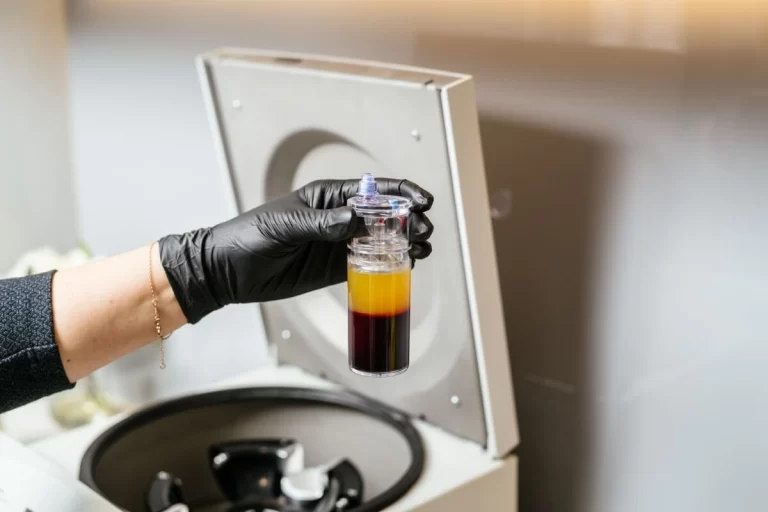
Platelet-Rich Fibrin (PRF) is prepared from a patient’s own blood using a centrifugation process, without the addition of an anticoagulant.
When blood is centrifuged in this way, it forms a fibrin clot that contains platelets, white blood cells and growth factors within a three-dimensional fibrin matrix. This matrix may form a scaffold-like structure when placed within the skin.
During consultation, PRF may be discussed in relation to concerns such as:
- Skin firmness and elasticity
- Skin tone and texture
- Collagen and elastin support
- Areas of facial volume loss
Suitability for PRF is assessed on an individual basis, with your practitioner discussing the proposed treatment approach, expected outcomes, limitations and potential risks as part of your consultation.

Why people consider PRF
As part of the natural ageing process, changes occur in the skin, connective tissue and underlying structures. These may include reduced elasticity, fine lines, uneven texture, thinning skin or loss of facial volume in areas such as the cheeks, temples and under-eye region.
PRF is often chosen by individuals who:
- Are interested in a treatment approach that uses components derived from their own blood
- Wish to discuss concerns relating to facial volume and skin quality
- Prefer an approach where changes may develop gradually over time
- Are interested in discussing how PRF may form part of a broader, individualised treatment plan
- Wish to explore PRF alongside other skin treatments, where clinically appropriate

How PRF Works
A small sample of your blood is collected and placed into a centrifuge. Without the addition of an anticoagulant, the blood undergoes its natural clotting process during centrifugation, separating into different components, including plasma, a fibrin matrix containing platelets and white blood cells, and red blood cells.
The fibrin component is then carefully collected and prepared according to the individual treatment plan. Depending on the preparation technique and intended use, PRF may have a more liquid or more structured consistency.
The prepared PRF is then introduced into the selected treatment area using an appropriate technique, which may include a fine, blunt-tipped cannula.
Once placed within the tissue, the fibrin matrix may form a scaffold-like structure. PRF has been studied for its potential role in:
- Providing structural support in areas of facial volume loss
- Supporting the gradual release of naturally occurring growth factors from the fibrin matrix
- Supporting cellular processes associated with collagen and elastin production
- Supporting processes involved in tissue repair and regeneration
Changes following PRF treatment may develop gradually and vary between individuals. The expected outcomes, timeframe, limitations and suitability of treatment will be discussed with your practitioner during consultation.

What areas can be treated with PRF?
PRF can be considered for a range of facial concerns, including:
- General facial rejuvenation
- Under-eye area and tear trough hollows
- Cheek and temple volume support
- Nasolabial folds and marionette lines
- Jawline and lower face support
- Areas with volume loss, fine lines or uneven texture
- Neck
Your practitioner will determine which areas are appropriate based on your goals and individual assessment.