
In accordance with Therapeutic Goods Administration (TGA) regulations, we are unable to provide detailed information about specific treatments online. Such information may be misinterpreted as the promotion of prescription-only (Schedule 4) medications – this is not permitted under TGA guidelines.
For this reason, a consultation with one of our practitioners is required. During your comprehensive consultation, your practitioner will carefully assess your skin, discuss your concerns, and provide education around suitable treatment options. A personalised treatment plan will then be created to address your individual needs.
Treatment costs will vary depending on your tailored plan and will be discussed with you in detail during your consultation.

Understanding PRP
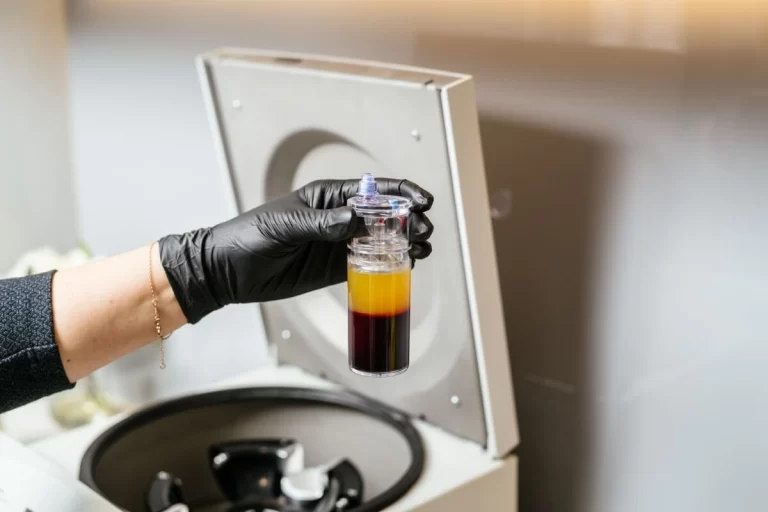
Platelet-Rich Plasma (PRP) is derived from a person’s own blood and prepared in a clinical setting. The role, limitations, and expected response to PRP are discussed during consultation with a medical practitioner.
Outcomes vary between individuals and will be discussed during consultation.
Why people consider PRP
As part of the natural ageing process, changes occur in the skin, connective tissue and underlying structures. These may include reduced elasticity, fine lines, uneven texture or thinning skin.
PRP is often chosen by individuals who:
- Prefer a natural, biocompatible approach using their own cells.
- Wish to complement other treatments such as skin needling, laser, or regenerative therapies.
- Are looking to support skin and scalp vitality.
Suitability and expected outcomes vary and are assessed on an individual basis following consultation.

How PRP works
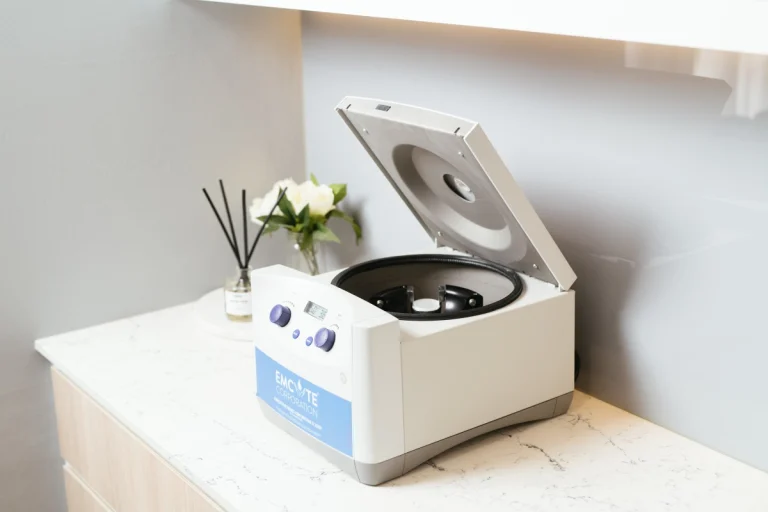
PRP involves collecting a small sample of blood and processing it in a clinical environment. The preparation method and potential role of PRP are discussed during consultation.
What areas can be treated with PRP?
Treatment areas, technique, and suitability are determined during consultation based on practitioner assessment and individual factors.