

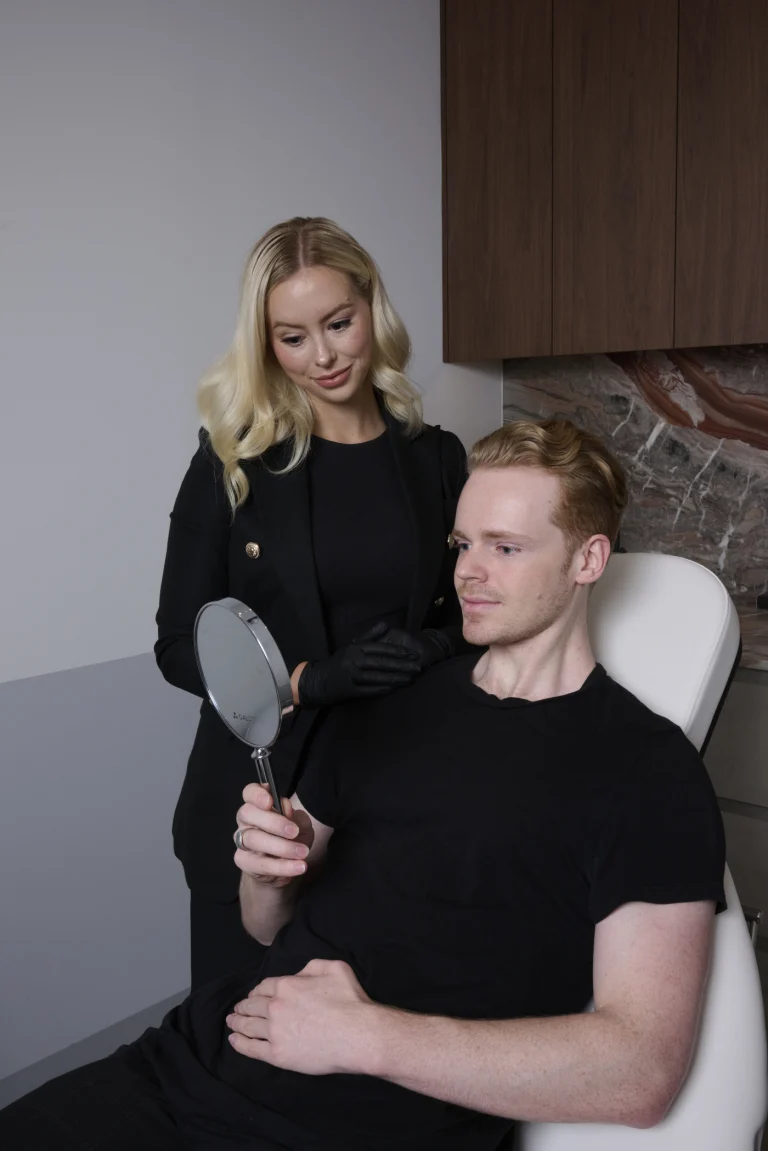
In accordance with Therapeutic Goods Administration (TGA) regulations, we are unable to provide detailed information about specific treatments online. Such information may be misinterpreted as the promotion of prescription-only (Schedule 4) medications.
For this reason, a consultation with one of our practitioners is required. During your comprehensive consultation, your practitioner will carefully assess your skin, discuss your concerns, and provide education around suitable treatment options. A personalised treatment plan will then be created to address your individual needs.
Treatment costs will vary depending on your tailored plan and will be discussed with you in detail during your consultation.
Understanding Facial Ageing
Facial ageing is a gradual and individual process that involves changes across multiple anatomical layers of the face. These changes may influence facial structure, volume, and contour over time. The rate and extent of facial ageing varies between individuals and can be influenced by factors such as genetics, environmental exposure, and lifestyle.
Facial ageing may involve changes at several levels, including:
Skeletal Changes
The facial skeleton provides structural support for overlying soft tissues. With increasing age, bone density may reduce and certain facial bones, such as the maxilla (mid-face) and mandible (jaw), can undergo gradual resorption. These changes may alter facial proportions and structural support, which can contribute to changes in facial contours, particularly in areas such as the cheeks, jawline, and temples.
Facial Fat Compartment Changes
The face contains multiple distinct fat compartments that contribute to facial shape and contour. Over time, these fat compartments may decrease in volume and change position due to factors such as gravity and alterations in connective tissue support. This may be associated with changes in facial fullness, including the appearance of under-eye hollowing, increased prominence of nasolabial folds, and changes along the jawline.
Skin and Connective Tissue Changes
As part of the natural ageing process, changes can occur within the skin and its supporting connective tissues. With increasing age, the activity of fibroblasts, cells involved in the production of structural proteins such as collagen and elastin, may gradually reduce. These proteins contribute to skin strength and elasticity.
Over time, such changes may be associated with variations in skin texture, hydration, and elasticity. In addition, connective tissue structures that provide support to the skin, including ligaments, may change in strength and flexibility. These processes are considered normal features of ageing and can vary significantly between individuals.
External Factors
A range of environmental and lifestyle factors may influence how age-related changes appear over time. Factors commonly discussed in relation to skin health include cumulative ultraviolet (UV) exposure, smoking, stress, and fluctuations in body weight. The extent to which these factors affect individuals differs and may interact with genetic and environmental influences.
Clinical Context
Changes in skin quality, facial structure, and soft tissue support are complex and individual. Assessment of these factors should be undertaken by a qualified health practitioner, who can consider anatomy, medical history, and personal circumstances.

Understanding Facial Volume Changes
Changes in facial volume and contour can occur over time as part of the natural ageing process. Some individuals may also have naturally lower volume in certain facial areas due to genetics or facial structure. The way these changes are perceived varies between individuals and may be influenced by personal preferences, cultural factors, and lifestyle.
Concerns related to facial volume are subjective and differ from person to person. What is considered balanced or proportionate is individual and may change over time.
Clinical Assessment and Consultation
Evaluation of facial volume, structure, and proportions is a clinical process that is undertaken by a qualified practitioner. This assessment considers factors such as facial anatomy, skin characteristics, medical history, and individual goals.
Areas Commonly Assessed During Consultation
During facial assessment, practitioners may review a range of anatomical regions, which can include:
- Mid-face (such as the cheeks and temples)
- Lips and surrounding areas
- Chin and jawline
- Areas around the mouth
- Hands
Assessment does not imply that intervention is required or recommended.